Best Practices in Manufacturing Operations
Safety and Efficiency Go Hand-in-Hand.
Best practices are proven methods, processes, and behaviors that consistently produce better outcomes than conventional approaches. In manufacturing settings, they focus on protecting workers and optimizing productivity, often drawing on industry standards, peer benchmarking, and lessons learned from experience.
Regulatory requirements, such as OSHA standards or rules established by state bodies such as the South Carolina Department of Environmental Services (SCDES) set the legal threshold for safe operations. Forward-thinking companies are shifting from reactive compliance to adopting proactive leadership through “Best-in-Class” processes and operational improvements.
Best practices go further by building safety and efficiency into the culture and systems of a company.
Examples include:
- Proactive hazard identification: near-miss reporting, job hazard analyses, and leading indicators rather than lagging injury rates alone.
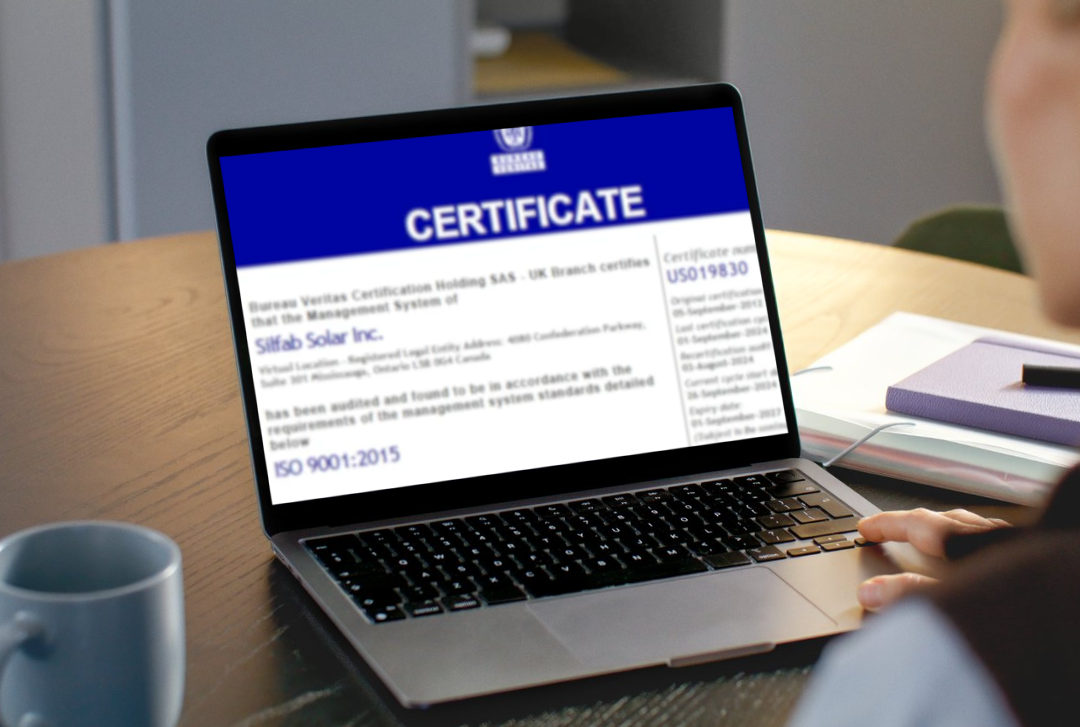
- Management systems: voluntary frameworks such as ISO 45001 (safety) and ISO 9001 (quality) that drive continuous improvement.
- Lean and operational excellence: The “5S workplace organization” model to standardize workflows and conduct regular maintenance to reduce waste, downtime, and error-prone conditions.
- Employee engagement: frontline involvement in safety committees and improvement initiatives.
At Silfab Solar, our operational and safety teams continually review the latest “best practices” available from multiple sources for adoption within our facilities. This has been our corporate objective from day one. Our American-based facilities are focused on strong environmental and social responsibility as well as performance, backed by rigorous accountability and governance systems.
Most recently, we had the opportunity for a third-party, nationally recognized engineering company (TRC Engineering), to review our South Carolina facility systems and processes. This study, part of a voluntary compliance agreement with SCDES, concluded that Silfab’s equipment and operations met all local, state and federal requirements. TRC Engineering also provided us with a handful of best practices above and beyond standard or code, utilizing the latest proven techniques, systems and training. These best-in-class recommendations either have or will soon be incorporated into our operations as we progress with our commissioning.
Companies that adopt best practices typically see fewer injuries, lower insurance and turnover costs, higher equipment reliability, and stronger morale. Ultimately, best practices turn safety and efficiency from obligations into competitive advantages. We have seen employees take pride in working for a company that prioritizes environmental integrity.
Our Commitment to Quality and Safety
Silfab continues to deliver high-quality, American-made solar products by combining best-in- class processes that set the standard for our operation, continuous improvement and a safety-first mindset, and a well-trained dedicated workforce that uses the latest tools and technology for both safety and efficiency.